ALABAMA'S MOST BEAUTIFUL PLACES
Bon Secour National Wildlife Refuge
By Frank Emory Click
any image for a full size tour
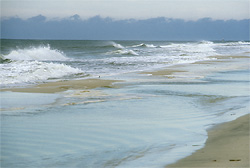
The beach at Bon Secour NWR
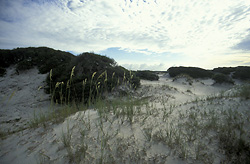
Sand dunes with
sea oats
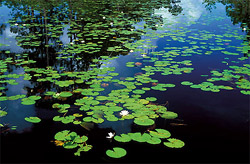
Water lilies
in swamp
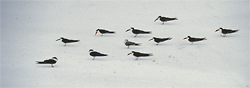
Caspian terns
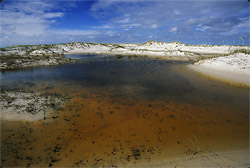
Water filled pool in sand dunes
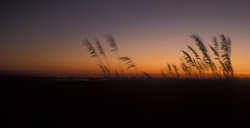
Sea oats and breeze
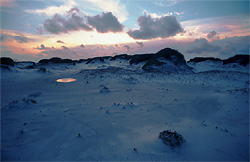
Wet sand
after a shower
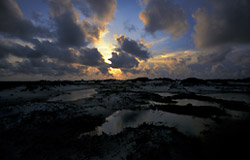
Sunset at Bon Secour NWR
No examination of Alabama's most beautiful places would be
complete without mention of our beautiful coast with its
sandy white beaches.
The Bon Secour NWR contains nearly 7,000 acres of
undeveloped land west of Gulf Shores on the Fort Morgan
peninsula. It offers a good representation of Alabama's
coast as it was before houses, condominiums, motels,
souvenir shops, restaurants and bars blanketed nearby areas.
This comparatively small refuge was established in 1980 to
preserve the area and now over 100,000 people visit
annually. By contrast, around 1.1 million visit nearby Gulf
Shores and Orange Beach.
Bon Secour NWR is located in five separate units but the
Purdue unit is developed for visitors. It includes three
main walking trails: Pine Beach Trail, Gator Lake Trail and
the Jeff Friend Trail. Also there is Centennial Trail which
joins the Pine Beach and Jeff Friend (map). You can't
tell from the map, but you can't walk the shore of Little
Lagoon from one trail to the other because of an impassable
creek that empties into the lagoon. You may be able to cut
through the woods by the creek. I recommend you examine the
area using Google Earth before you visit.
If it's your first visit I suggest you park at the head of
the Pine Beach Trail, walk to Gator Lake and Little Lagoon
and then on to the beach. On your way back, take the Gator
Lake Trail to Mobile Street and follow it back to the
parking lot. The scenery along Gator Lake Trail is more
diverse than Pine Beach Trail. It consists of scrub forest
with a variety of plant species. There are sandy ridges with
drained and partially drained areas. In certain areas just
off the trail, the ground is literally covered with reindeer
moss.
The walk back on Mobile Street is not without interest
either. You might see alligators in the marshy swamps as you
walk by slides they use when crossing the road. In the
afternoon the black swamp water reflecting the sky produces
a beautiful deep blue; a striking background for green lily
pads, white water lilies and reflections of clouds, pines
and vegetation.
With so much development along the gulf coast, we are
fortunate to have Bon Secour NWR set aside for public
enjoyment. It is a pleasure to walk through one of the
largest parcels of undeveloped land on the Alabama coast,
minimally altered by the hand of man.
Animal habitat
Bon Secour NWR is habitat for around 370 species of permanent and migratory birds. Migratory birds begin arriving in April after a 500 mile flight across the Gulf of Mexico from the Yucatan Peninsula. Occasionally, under bad weather conditions, large flocks of a variety of birds arrive all at once in a "fall out". It is a spectacular sight and sound to behold. Fall migration peaks around mid-October.
The white sandy beach, complete with sand dunes and sea oats, is home to the Alabama beach mouse, a rare subspecies of field mouse. It is best not to tromp over the dunes because it degrades them and destroys the underground burrows of the mice. Dunes build up slowly from wind gathering around the roots of sea oats. Wild sea oats are protected, not because they are endangered, but because they stabilize dunes and protect the shore from erosion.
The beach at Bon Secour NWR also serves as nesting sites
for threatened loggerhead turtles as well as the world's
rarest sea turtle, federally endangered Kemp's Ridley.
Loggerhead and green sea turtles may also be present.
Volunteers patrol the beach to tag and monitor nests.
Hatching begins when one baby turtle burrows its head to the
surface and waits until its siblings are ready. Then most of
them emerge all at once in a scamper to the sea. Volunteers
help make sure they make it to the water safely.
The earliest human inhabitants of the gulf coast
Walking the trails in the refuge brings up the question of how long it has been like this and how it might have looked when the first humans arrived.
The first humans believed to visit the area were Paleo Indians who arrived as early as 11,000 years ago. Alabama was drier then and temperatures were five to ten degrees cooler. The climate was more like that of southern Canada now. The last glacial period was at its end and between nine and ten thousand years ago the climate stabilized. About 8500 years ago temperatures reached about what they are today.
The early Paleo Indians and those who followed may have
seen much of the same flora and fauna as we do today, but
some areas were covered with sparse forests of northern
pine. The big difference between then and now is that sea
levels were lower and dry land extended another fifty miles
or so further out.
The 2010 gulf oil spill
Bon Secour was one of the first gulf coast wildlife refuges to be impacted by the BP oil spill. In June, 2010 oil washed ashore on the beaches of the refuge. The U.S. Fish & Wildlife Service used bulldozers to build a berm to buffer the refuge from oil washing ashore and into Little Lagoon.
Oil can be deadly to sea turtles. One newspaper article showed a turtle found covered with oil in the refuge. Fortunately, the oil did not impact the six miles of trails. The Fish and Wildlife Service and the National Oceanic and Atmospheric Administration moved hundreds of sea turtle nests from the panhandle beaches of Alabama and Florida to the east coast of Florida for release into the Atlantic Ocean. The sea turtle hatchlings would usually end up in the Atlantic Ocean at some point in their life cycle, but typically spend much of their youth in the Gulf. Scientists were unsure how this would impact the hatchlings but most agree that releasing them into the oil infested Gulf waters was a death sentence.
Thousands of birds along the coast died from the oil spill. For example, over the course of a year after the spill, about 13 caspian terns (like in the photo above) have been reported dead and near 240 royal terns. All total around 6500 birds have been reported dead. Of course most dead birds were never found or reported so there's no telling how many died. A year after the spill, little evidence of it is to be found in the refuge.